

Iridology & Sclerology — What Your Eyes Reveal About Your Health
“The eyes are the window to the soul — and, it turns out, to your health.”
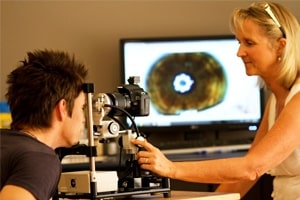
At True Vitality, almost every in-clinic consultation includes a detailed examination of your eyes. Using close-up photography, we capture images of both eyes and review them together on screen — giving you a front-row seat to what your body may be trying to tell you.
This combination of iridology and sclerology is one of the most insightful assessment tools available in naturopathic practice, offering a non-invasive window into both inherited tendencies and current health patterns.
Sclerology
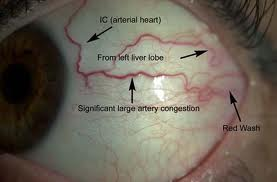
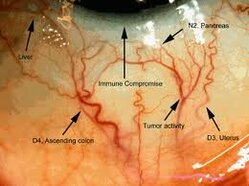
What Is Sclerology?
Sclerology is the study of the whites of the eyes — the sclera. While healthy scleras should appear clear and white, they often display a network of red lines, markings, and discolourations that can tell a remarkable story about what’s happening in the body.
Anatomically, the sclera is considered an extension of the dura mater — the thick protective membrane surrounding the brain and spinal cord. Because of this connection, sclerology is particularly valuable for identifying more acute or active conditions, and for tracking how your health is shifting over time.
Sue finds sclerology to be one of the most revealing assessment tools in her practice. The whites of the eyes can offer profound clues about where the root cause of a health issue may lie — sometimes uncovering connections that standard testing has missed.
A Real-World Example
One client in his forties had suffered a heart attack, yet his cardiologists were puzzled — his heart appeared structurally sound. When he visited True Vitality, his blood work showed only minor imbalances. But when Sue examined his scleras, the story deepened considerably.
The sclerology markings showed strong indicators not only in the heart region — understandable given his history — but also in the thyroid area. His GP had declined to test his thyroid, noting he showed no outward signs of thyroid dysfunction. Sue arranged for private thyroid testing, and the results were significant — his thyroid was clearly under stress.
This was not surprising given the well-established clinical link between thyroid dysfunction and cardiovascular risk. Research published in journals including Thyroid and The European Heart Journal has documented associations between hypothyroidism, subclinical thyroid imbalance, and increased cardiac risk factors. His GP acted promptly on the results.
Alongside conventional care, targeted herbal and nutritional support was used to support both his cardiovascular and thyroid systems — and he has remained well ever since.
What Is Iridology?
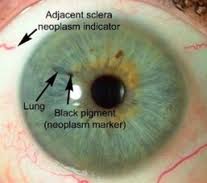
Iridology is the study of the iris — the coloured part of the eye. The nerve fibres that extend throughout the body and brain connect via the optic nerve, and are thought to reflect both genetic predispositions and changes that have developed over time due to illness, lifestyle, or environmental factors.
In practice, iridology helps build a picture of your constitutional strengths and weaknesses — areas of the body that may need more support, or patterns that have been present since birth. When combined with sclerology, it creates a remarkably complete view of a person’s health landscape.
As iridology pioneer Bernard Jensen wrote: “The eye is the greatest tattletale of the human body.”
Iridology
Iridology & Sclerology at True Vitality
Iridology and sclerology are available for in-clinic consultations at the True Vitality clinic on the Sunshine Coast. During your visit, Sue will:
- Photograph both eyes using close-up imaging
- Review the iridology and sclerology images together with you on screen
- Discuss what the markings may indicate in the context of your broader health picture
- Use findings to help guide naturopathic support recommendations
Not local to the Sunshine Coast? If you’re attending via telehealth, it’s possible to send clear, close-up photos of your eyes taken on your phone — both the iris and the whites — and Sue can review these as part of your consultation. While in-clinic photography provides the most detail, phone photos can still offer valuable insights. Please contact Sue prior to your telehealth appointment to discuss this option.
This is a non-invasive, pain-free assessment that takes only minutes — but can offer insights that take years of conventional testing to uncover.
What Clients Say About Iridology & Sclerology
“We were looking for a qualified Naturopath that did iridology and live blood screening and we found that Sue also did sclerology. Sue is very professional and I found the results from the sclerology in particular were amazing.” — True Vitality Client ⭐⭐⭐⭐
“I was most impressed with the sclerology as there was a visual manifestation mapped out in front of my eyes enabling me to see exactly what was happening in my body. Sue helped me to create a treatment plan which has resulted in a great improvement in my health and well-being.” — Michele G, True Vitality Client
Read more client testimonials →
Frequently Asked Questions
Is iridology scientifically proven? Iridology is a traditional naturopathic assessment tool with a long history of clinical use. While large-scale clinical trials are limited, many practitioners and clients find iridology and sclerology a valuable part of a holistic health assessment when used alongside other diagnostic information.
Does iridology replace medical testing? No. Iridology and sclerology are complementary tools used alongside — not instead of — conventional medical investigation. As the case study above illustrates, findings from iridology and sclerology can actually prompt important medical follow-up.
What can iridology reveal? Iridology may indicate areas of genetic predisposition, constitutional strengths and weaknesses, and changes in the body related to health conditions over time. It does not diagnose disease.
What can sclerology reveal? Sclerology can highlight more acute or active health patterns through the markings in the whites of the eyes, and is particularly useful for monitoring changes over time.
Is iridology and sclerology painful or invasive? Not at all. Photos are simply taken of your eyes — no drops, no contact, no discomfort whatsoever.
Do I need a separate appointment for iridology and sclerology? No — iridology and sclerology are typically included as part of an in-clinic consultation at True Vitality, alongside other assessments such as live blood screening and urinalysis.
Can iridology and sclerology be done via telehealth? Iridology and sclerology are best performed in clinic where high-quality eye photography is possible. However, if you are unable to attend in person, you are welcome to send clear close-up photos of your eyes taken on your phone, and Sue can review these as part of your telehealth consultation. Contact Sue before your appointment to arrange this.
How is sclerology different from iridology? Iridology focuses on the coloured iris and tends to reflect genetic and longer-term constitutional patterns. Sclerology focuses on the whites of the eyes and is particularly good at revealing more current or acute health changes. Together they provide a more complete picture than either would alone.
Curious about what your eyes might reveal? Book an in-clinic consultation with Sue Kira today.